Session 6 came around with the topic: BioBusiness Revolution: Healthcare and Biomedical Sciences (Past, Present and Future). Through reading a couple of my peers' blogs, it seems like this topic is not appealing to many, but on the contrary it is something that piqued my interest.
Maybe at first sight I thought that there's nothing particularly outstanding about the topic, but after going through some of the readings and the class, I found that I enjoyed dealing with this topic!
Perhaps it's due to the fact that there are so many possibilities that we have yet to capture for both healthcare and biomedical sciences.
For this lesson, Prof was late due to the rain, haha. In the meantime we were shown a two-part video on 'Emergence of and Innovations in Disease Management', which I had already seen actually, but no harm refreshing my memory!
I thought it was interesting how there was a little irony in how improved healthcare has helped people to live longer, yet it only means more chronic diseases (that come with age), and this in turn only leads to more problems of lacking resources in providing long-term healthcare and the issue of an aging population.
The solution in this is of course disease management. This involves careful analysis of patients at various forms of risk and allocating resources better. With new ways to monitor and motivate patients through surveillance through technology, the doctors have more time on their hands to deal with issues that cannot be done in any other ways than personally. Such an example would be equipments at home that are able to remind patients to take their medicine, record data and compute symptoms as reported by patients to identify what could possibly be wrong. Of course as with any forms of technology, this also comes with risks that it might fail, and in the context of healthcare, we can hardly afford to mess up.
Therefore when it comes to healthcare dealing with chronic diseases, the matter is likely to be open for debate.
However, we can devote these forms of healthcare towards more minor issues. This is related to what Yu Jun (Ethan) presented in this session, on mobile healthcare. For minor illnesses like flu or an injury, patients can easily contact their doctors through their phones and have the doctors advise them on what to do through a video call and interactive pictures/instructions. In this way healthcare can be much more efficient for all.
One problem that could arise from this would be the effects on the workforce in the healthcare industry. For example, in the article on disruptive change in healthcare, it mentioned that it radiologists are threatened when researches come up with a technology that could do the radiologists' jobs easily. Harsh as this may sound, I don't think this should be a factor holding us back from being more open to disruptive changes, because we wouldn't be able to advance if we weren't open to change. Technology has been snatching away jobs for a long time (back to days where people did the jobs that technology in factories now do), but it has also been creating jobs.
The presenters for this session had interesting topics. The topics on human immortality and genetic discrimination are the ones most interesting to me. It's rather amazing to think what possibilities technology and bio science can bring to us, and the controversy of whether it is good or just destructive.
In my opinion, I wouldn't want to live forever, nor would I want to find out how long I have to live or have people know how long I have to live and be discriminated based on that. Yet, in this class, there were plenty of others who want to do either or both. Once again it boils down to personal opinion. Regardless of whether you want to do it or not, you can't deny that technology such as those are indeed impressive.
Overall, I felt that this session was interesting and provided me with a lot of insights. I would rae this session a 9.5.
Sunday, September 25, 2011

Wednesday, September 14, 2011
#5
Today's (or rather, two days ago.. I started typing on Monday itself, thus the 'today') topic was on ICT and World Change - Past, Present, Future.
The lesson today was filled with several interesting videos!
The first one piqued my interest. It was a project on an interactive on-screen character called Milo. Here in the video we see Clare interacting with the boy as if he was a real human, reaching out when he threw something in her direction from his world. This video lets us think more carefully about the integration of technology into our society. Are characters like Milo 'real'? No doubt if I was in Clare's footsteps, I would react the same way as her. Because of the way Milo interacts, it felt instantly like he was a real human being with social skills and feelings.
Characters like Milo could possibly help in developing social skills in children who are left at home most of the time, as Prof mentioned. But the risk in that is definitely that the kid may end up being so dependent on Milo and treating him too much as a real friend, that he may not go out to make real ones.
With technology becoming such a necessary part of our lives, is it possible that in the future, our perception of humanity may change? Indeed a time may come when we would no longer have a clear line of what is human and what is machine. Sounds pretty extreme, but hey, all the technology we possess today weren't very believable in the past. Heck even the earth being round was deemed impossible!
The lesson began proper with introductory remarks on the types of ICT. One of the most prominent ones was the development of the web today. Through a video, Prof let us see how the internet has developed from Web 1.0 -> Web 2.0 -> Web 3.0. Right now we are in an era where the net is highly interactive and knows what you want, just like how the google search engine is personalized according to your usual searching habits.
The only way for us to move now is forward. In a fast developing world, there is barely any room for looking back, and the sole purpose of looking back should only be for picking up of lessons. Thus, the importance of knowledge management for a knowledge-based company. Okay I admit it, I've never heard of a knowledge officer before until this lesson, much less the importance of it ._. But we all learn something new each day, don't we?
So now the interesting question is, have we captured the potential?
I agree with Prof's answer.
No, no and no.
In most of the areas where ICT can change the world in a better way, we have not maximized its potential. Once again the question of poverty comes into mind. How is it that despite all the development in technology that there is still so much absolute and relative poverty in the world?
ICT can be applied for example, in education in third world countries.
We can even use it for democratic purposes, as Mr Obama has done in his campaign. If it was used as a platform for people's opinions, we could further minimize unhappiness or discontent.
Now another question is, is it a good thing if we capture the potential?
Not necessarily so, definitely. How would you like your whereabouts to be tracked all the time, 24/7? Yes, that will help in the case of criminals. But it does invade one's privacy.
Melissa then gave us a presentation on the future of television. Her presentation was engaging and very personal to us, which is why she could easily capture my attention. She presented on the possibilities of television in the future, for example, advertisements could be eliminated completely and instead replaced with a system whereby items in the movie or drama being screened can be clicked on to let the user find out more about it.
Thereby she raised the question on the relationship between television and tablet.
In my opinion, it is possible that in the future there will be a blurring of the line between the TV and the tablet. My individual paper will touch on how PDAs and handphones eventually merged to form one product that is smartphone.
Can it happen with TV and tablet?
Highly possible, given the interchangeable functions that the two already share at the current moment.
Shaak's presentation was also thought-provoking. He talks of the free economy and how it actually works. Everyday things are getting cheaper. We are getting free wi-fi access, free access to search engines and other types of interactive platforms. The reason being that only a small number of people need to pay and that would be enough to subsidize the rest of the millions that use that particular function.
Indeed it is interesting and nice to know that today's things are getting cheaper and more accessible.
Then why does poverty still exist?
Back to the poverty question? Technology should be used to solve poverty, yet is technology not what caused it? Haha. That would take too long to debate.
The rest of the presenters, Wei Wei and Aloysius, also did well in their presentations of IN 2015 and cloud computing respectively. Good job you all.
So far all the presenters are pretty good. Pressure D:
Anyways, time to rate this lesson. I felt like I learned plenty from this lesson so I would rate it 8.5/10.
The lesson today was filled with several interesting videos!
The first one piqued my interest. It was a project on an interactive on-screen character called Milo. Here in the video we see Clare interacting with the boy as if he was a real human, reaching out when he threw something in her direction from his world. This video lets us think more carefully about the integration of technology into our society. Are characters like Milo 'real'? No doubt if I was in Clare's footsteps, I would react the same way as her. Because of the way Milo interacts, it felt instantly like he was a real human being with social skills and feelings.
Characters like Milo could possibly help in developing social skills in children who are left at home most of the time, as Prof mentioned. But the risk in that is definitely that the kid may end up being so dependent on Milo and treating him too much as a real friend, that he may not go out to make real ones.
"The most exciting breakthroughs of the 21st century will not occur because of technology but because of an expanding concept of what it means to be human."
- John Naisbitt-
With technology becoming such a necessary part of our lives, is it possible that in the future, our perception of humanity may change? Indeed a time may come when we would no longer have a clear line of what is human and what is machine. Sounds pretty extreme, but hey, all the technology we possess today weren't very believable in the past. Heck even the earth being round was deemed impossible!
The lesson began proper with introductory remarks on the types of ICT. One of the most prominent ones was the development of the web today. Through a video, Prof let us see how the internet has developed from Web 1.0 -> Web 2.0 -> Web 3.0. Right now we are in an era where the net is highly interactive and knows what you want, just like how the google search engine is personalized according to your usual searching habits.
The only way for us to move now is forward. In a fast developing world, there is barely any room for looking back, and the sole purpose of looking back should only be for picking up of lessons. Thus, the importance of knowledge management for a knowledge-based company. Okay I admit it, I've never heard of a knowledge officer before until this lesson, much less the importance of it ._. But we all learn something new each day, don't we?
So now the interesting question is, have we captured the potential?
I agree with Prof's answer.
No, no and no.
In most of the areas where ICT can change the world in a better way, we have not maximized its potential. Once again the question of poverty comes into mind. How is it that despite all the development in technology that there is still so much absolute and relative poverty in the world?
ICT can be applied for example, in education in third world countries.
We can even use it for democratic purposes, as Mr Obama has done in his campaign. If it was used as a platform for people's opinions, we could further minimize unhappiness or discontent.
Now another question is, is it a good thing if we capture the potential?
Not necessarily so, definitely. How would you like your whereabouts to be tracked all the time, 24/7? Yes, that will help in the case of criminals. But it does invade one's privacy.
Melissa then gave us a presentation on the future of television. Her presentation was engaging and very personal to us, which is why she could easily capture my attention. She presented on the possibilities of television in the future, for example, advertisements could be eliminated completely and instead replaced with a system whereby items in the movie or drama being screened can be clicked on to let the user find out more about it.
Thereby she raised the question on the relationship between television and tablet.
In my opinion, it is possible that in the future there will be a blurring of the line between the TV and the tablet. My individual paper will touch on how PDAs and handphones eventually merged to form one product that is smartphone.
Can it happen with TV and tablet?
Highly possible, given the interchangeable functions that the two already share at the current moment.
Shaak's presentation was also thought-provoking. He talks of the free economy and how it actually works. Everyday things are getting cheaper. We are getting free wi-fi access, free access to search engines and other types of interactive platforms. The reason being that only a small number of people need to pay and that would be enough to subsidize the rest of the millions that use that particular function.
Indeed it is interesting and nice to know that today's things are getting cheaper and more accessible.
Then why does poverty still exist?
Back to the poverty question? Technology should be used to solve poverty, yet is technology not what caused it? Haha. That would take too long to debate.
The rest of the presenters, Wei Wei and Aloysius, also did well in their presentations of IN 2015 and cloud computing respectively. Good job you all.
So far all the presenters are pretty good. Pressure D:
Anyways, time to rate this lesson. I felt like I learned plenty from this lesson so I would rate it 8.5/10.
Sunday, September 11, 2011
#4
Session 4's session was on Drivers of World Change and Change Management & Leadership.
The session started with several discussions on the different types of drivers of world change such as globalization and environmental drivers. Prof then touched on the difference between evolutionary and revolutionary change, which was interesting to note because the line can be rather blurred.
Another thing that was discussed in class was the notion of a disruptive change, loosely defined as a revolution that has great impacts on the world.
He went on to talk about the readings. I have read a couple of them myself and thought they were very good readings. The first reading on Global Drivers of Change to 2060 (Natural England Comissioned Report) was an interesting summary of several drivers of change that could happen in the near future. There are various global drivers of world change, varying from natural things beyond our control, to things that we have done that would impact future generations. It interesting to note that although a lot of the changes are human things that can be controlled, the dynamics of today's world is such that change is so necessary that they become inevitable and unstoppable.
An interesting video that was shown to us during the lesson was a video on a man dancing and making a fool of himself in public, and how in the course of the videos one follower steps in and the rest follow. It's a very simple but relevant example of how a leader is one who is not afraid to step out there and take risks. And because the man kept on dancing without feeling awkward or embarrassed, eventually he convinced the first follower that it's alright to do that. Indeed, a leader needs not only to be brave but to be persistent and committed to his purpose in order to gain others' trust.
The second half of the lesson discusses the difference between leadership and management. The best definition in my opinion was from one of the readings, "The manager does things right, the leader does the right thing."
Prof showed us a graph on the pessimism-time curve which shows the timeline of managing change which follows: uninformed optimism -> informed pessimism -> informed realism -> completion.
He compared this to a relationship. I agreed with this amusing comparision that the dynamics of a relationship loosely follows this timeline. Uninformed optimism being the honeymoon period of a relationship, informed pessimism being when they move in together and discover each others' faults, informed realism being the acceptance and commitment towards the other party and completion being marriage.
He also touched on the three approaches we can take to change.
Eagle approach: embraces and seeks change, stays ahead and leads.
Ostrich approach: 'head in a sand', is not aware of what's going on around him, just gets the job done
Dodo bird approach: one that does not adapt to change and therefore becomes 'extinct'.
Indeed, the one who survives is the one most adaptable to change. The ones that adapt are the ones who rise to become dominant players, while those who don't will only become a falling star.
I felt a lot more could have been discussed in this session. It was a bit of a pity to me because this topic and session was by far the most interesting for me. I would rate it 7/10.
The session started with several discussions on the different types of drivers of world change such as globalization and environmental drivers. Prof then touched on the difference between evolutionary and revolutionary change, which was interesting to note because the line can be rather blurred.
Another thing that was discussed in class was the notion of a disruptive change, loosely defined as a revolution that has great impacts on the world.
He went on to talk about the readings. I have read a couple of them myself and thought they were very good readings. The first reading on Global Drivers of Change to 2060 (Natural England Comissioned Report) was an interesting summary of several drivers of change that could happen in the near future. There are various global drivers of world change, varying from natural things beyond our control, to things that we have done that would impact future generations. It interesting to note that although a lot of the changes are human things that can be controlled, the dynamics of today's world is such that change is so necessary that they become inevitable and unstoppable.
An interesting video that was shown to us during the lesson was a video on a man dancing and making a fool of himself in public, and how in the course of the videos one follower steps in and the rest follow. It's a very simple but relevant example of how a leader is one who is not afraid to step out there and take risks. And because the man kept on dancing without feeling awkward or embarrassed, eventually he convinced the first follower that it's alright to do that. Indeed, a leader needs not only to be brave but to be persistent and committed to his purpose in order to gain others' trust.
The second half of the lesson discusses the difference between leadership and management. The best definition in my opinion was from one of the readings, "The manager does things right, the leader does the right thing."
Prof showed us a graph on the pessimism-time curve which shows the timeline of managing change which follows: uninformed optimism -> informed pessimism -> informed realism -> completion.
He compared this to a relationship. I agreed with this amusing comparision that the dynamics of a relationship loosely follows this timeline. Uninformed optimism being the honeymoon period of a relationship, informed pessimism being when they move in together and discover each others' faults, informed realism being the acceptance and commitment towards the other party and completion being marriage.
He also touched on the three approaches we can take to change.
Eagle approach: embraces and seeks change, stays ahead and leads.
Ostrich approach: 'head in a sand', is not aware of what's going on around him, just gets the job done
Dodo bird approach: one that does not adapt to change and therefore becomes 'extinct'.
Indeed, the one who survives is the one most adaptable to change. The ones that adapt are the ones who rise to become dominant players, while those who don't will only become a falling star.
I felt a lot more could have been discussed in this session. It was a bit of a pity to me because this topic and session was by far the most interesting for me. I would rate it 7/10.
Individual Topical Review Paper
i. Specific Innovation of Interest: A brief description of the disruptive innovation that, in your opinion, has either already changed the world or is likely to do so in the future.
Communications Technology: Smartphones
ii. Rationale for Selecting this Innovation: How, in your opinion, this specific innovation of interest has already changed the world (or is likely to do so in future).
Since the breakthrough of smartphones in the recent years, the dynamics of the mobile market has changed significantly. In the short span of a few years, many renowned brands that have been producing feature phones for years have switched to producing their own unique versions of smartphones in order to stay competitive. Now, approximately 72% of Singaporeans own smartphones and the percentage is likely to keep increasing.
iii. Proposed Approach to Development of Paper: The gist of the arguments and the key points you intend to cover in each section of your paper as you build-up your paper
Executive Summary
Smartphones are ingenious inventions that have quickly taken over the dynamics of how we communicate nowadays, so much so that the more 'normal' phones that we used to depend on are dubbed as 'dumbphones'. How has smartphones and its intelligent functions affected us and continue to do so in the future?
Background/Introduction
Smartphones as we know them today are no longer used just for calling or messaging alone. The smartphone incorporates more advanced functions such as wi-fi & 3G capabilities, interactive 3rd party gaming applications, video calling, touch-screen features, GPS navigation and more. Smartphones has enabled consumers to do all these things in just one device, making this particular innovation a convenient, efficient, important and sometimes a complete necessity for most people. The innovation of smartphones is, arguably, one of the most important development in recent years. The functions of a smartphone can be useful not just as entertainment but also as platforms for people to do work because of the increasing influence of the internet.
The innovation of smartphones has changed the world in many ways, whether directly or indirectly. It has had an impact on the market for mobile phones,
It is interesting (though not necessarily relevant) to note that 'smartphone' is a registered word online but 'handphone' is not.
Historical Perspective (ie where we have come from – prior to the introduction of the innovation)
Before the introduction of smartphones:
The development of phones dates way back to the 1800s. The earliest distinct form of communication through telephone was an invention that belonged to Alexandra Graham Bell. The development of phones in the following years were confined to wire-based technology that were uncommon at that time and rare to see.
The first mobile phones emerged soon afterwards but were still bulky, expensive and not widely available.
The next breakthrough was the development of handheld phones which included basic communicating services.
Finally, feature mobile phones today include other functions such as games, calendar, calculator, messaging systems and so on.
Current Situation (ie where we are today – how the innovation has changed things)
Today, smartphones are dominating the market in ways we may not have imagined. Smartphones are not only changing the market and consumerism, it is also starting to change the way we think or act.
- The definition of a smartphone today.
What is smart?
With the emergence of the iPhone, Blackberry and other smartphones that followed, there is a standard and typical set of expectations that encompass smartphones today.
- Touchscreen/QWERTY keypad is the most common design of a smartphone that allows for more user-friendly navigation through its functions
- 3G standards (as compared to 2G standards)
- Functions of a personal digital assistant (PDA): able to send email, messages, has wireless functions etc.
- Supports third party applications
- Web access at high speeds with 3G (and the developing 4G) networks
- Operating systems such as iPhone OS
- Economic impacts of the smartphone on the mobile phone market
Competition between smartphones and feature phones
Competitive innovations between smartphones
Third party industries affected by this development
- Social impact of the smartphones
Convenience & Efficiency
Communication between people
Cultural impact
- Future Considerations (ie where we might go – how you foresee things going in future)
4G technology
Problems of changing definitions
Change is constant, and so is innovation. Technology will keep developing in the future, whatever we consider to be smart now may not be so in the future. Is it possible to develop something big enough to make a breakthrough in the market as a completely new set of technology instead of being a branch development of the smartphone?
References
http://www.straitstimes.com/BreakingNews/Singapore/Story/STIStory_661682.html
Communications Technology: Smartphones
ii. Rationale for Selecting this Innovation: How, in your opinion, this specific innovation of interest has already changed the world (or is likely to do so in future).
Since the breakthrough of smartphones in the recent years, the dynamics of the mobile market has changed significantly. In the short span of a few years, many renowned brands that have been producing feature phones for years have switched to producing their own unique versions of smartphones in order to stay competitive. Now, approximately 72% of Singaporeans own smartphones and the percentage is likely to keep increasing.
iii. Proposed Approach to Development of Paper: The gist of the arguments and the key points you intend to cover in each section of your paper as you build-up your paper
Executive Summary
Smartphones are ingenious inventions that have quickly taken over the dynamics of how we communicate nowadays, so much so that the more 'normal' phones that we used to depend on are dubbed as 'dumbphones'. How has smartphones and its intelligent functions affected us and continue to do so in the future?
Background/Introduction
Smartphones as we know them today are no longer used just for calling or messaging alone. The smartphone incorporates more advanced functions such as wi-fi & 3G capabilities, interactive 3rd party gaming applications, video calling, touch-screen features, GPS navigation and more. Smartphones has enabled consumers to do all these things in just one device, making this particular innovation a convenient, efficient, important and sometimes a complete necessity for most people. The innovation of smartphones is, arguably, one of the most important development in recent years. The functions of a smartphone can be useful not just as entertainment but also as platforms for people to do work because of the increasing influence of the internet.
The innovation of smartphones has changed the world in many ways, whether directly or indirectly. It has had an impact on the market for mobile phones,
It is interesting (though not necessarily relevant) to note that 'smartphone' is a registered word online but 'handphone' is not.
Historical Perspective (ie where we have come from – prior to the introduction of the innovation)
Before the introduction of smartphones:
The development of phones dates way back to the 1800s. The earliest distinct form of communication through telephone was an invention that belonged to Alexandra Graham Bell. The development of phones in the following years were confined to wire-based technology that were uncommon at that time and rare to see.
The first mobile phones emerged soon afterwards but were still bulky, expensive and not widely available.
The next breakthrough was the development of handheld phones which included basic communicating services.
Finally, feature mobile phones today include other functions such as games, calendar, calculator, messaging systems and so on.
Current Situation (ie where we are today – how the innovation has changed things)
Today, smartphones are dominating the market in ways we may not have imagined. Smartphones are not only changing the market and consumerism, it is also starting to change the way we think or act.
- The definition of a smartphone today.
What is smart?
With the emergence of the iPhone, Blackberry and other smartphones that followed, there is a standard and typical set of expectations that encompass smartphones today.
- Touchscreen/QWERTY keypad is the most common design of a smartphone that allows for more user-friendly navigation through its functions
- 3G standards (as compared to 2G standards)
- Functions of a personal digital assistant (PDA): able to send email, messages, has wireless functions etc.
- Supports third party applications
- Web access at high speeds with 3G (and the developing 4G) networks
- Operating systems such as iPhone OS
- Economic impacts of the smartphone on the mobile phone market
Competition between smartphones and feature phones
Competitive innovations between smartphones
Third party industries affected by this development
- Social impact of the smartphones
Convenience & Efficiency
Communication between people
Cultural impact
- Future Considerations (ie where we might go – how you foresee things going in future)
4G technology
Problems of changing definitions
Change is constant, and so is innovation. Technology will keep developing in the future, whatever we consider to be smart now may not be so in the future. Is it possible to develop something big enough to make a breakthrough in the market as a completely new set of technology instead of being a branch development of the smartphone?
References
http://www.straitstimes.com/BreakingNews/Singapore/Story/STIStory_661682.html
Sunday, September 4, 2011
#3
Short summary of what was covered...
An interesting video was shown to us at the start of the lesson: The Story of Stuff.
The video was simple, yet creative with animations that keep it from bordering on boring. I have actually seen this video before numerous times but it never gets old. Although the speaker was a little cynical in my opinion, she covered some good facts about today's world that shows we're living in a world that prioritizes consumerism and how the world is losing its sustainability due to this.
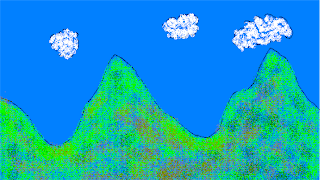
cr: Dr Gurinder Shahi
The above picture was designed (using paint, but no less designed from scratch :D) and shown by prof. The valleys represent firms that do not innovate and basically stay in a 'safe' zone that depends on old principles and few investments. The summits represent firms that are intensive in the knowledge and technology zone, high investment, new principles and with few being able to compete at their level. Finally, the clouds represent something like an idea, something not yet developed but potential.
I thought this was a creative and relatively simple way to understand the dynamics of innovation and development.
Finally Prof introduced us to the RDA (research-development-application) process which gives us some useful insights into a framework of the innovation process, with development being the most important section.
The presenters for this week were: Eliza, Willius, Fiona and Keith.
The person that stood out most for me was Fiona. She presented on Steve Jobs and how he was innovative in developing Apple products. It was a fantastic presentation that gave us interesting insights into the man that Steve Jobs really is, and the idea that in order to be ahead, you have to do things differently. Steve Jobs, by doing everything that seemed wrong, has produced some of the best results that couldn't be more right.
Key takeaway points:
1. Sustainability vs. Growth; Sustainable growth?
Can we have both growth and greenness?
This question was raised in class after the video was shown and it sparked off some debate. In order to get even close to that goal, we would definitely need to consider our priorities. The ultimate priority since a long time has been growth, but it is good to know that the world is changing slowly. More 'green' products are being invented and released into the market, an encouraging sign that we are taking steps to sustain Earth.
However, in reality it is possible to have both of course, but not possible to have both at the maximum capacity, at least not for now.
Inevitably, green items are going to be more costly, and this is possibly the biggest barrier towards a greener society. We don't want to get a hybrid car for much higher than a normal one, not to mention the petrol costs, not to mention you can't just drop by any petrol station to fuel the cars. Companies are unlikely to lower prices either because ultimately, they still need profits and growth.
Therefore in my opinion, have to decide which is the priority because it is not possible to maximize both. There's an opportunity cost either way. And right now we aren't very close to that. For example, if they were serious about green cars, they'd set up more filling stations instead of having one in an inconvenient location, just as prof mentioned.
2. Innovation is essential.
As mentioned before, definitely innovation is essential to ensure that firms stay in the summit or at the clouds. The economy works in a way such that it's not possible for firms to stay at the top all the time. They can't always be at the summit or be a dominant player/rising star for a long time. Eventually the others would pick up and/or overtake.
With this in mind, I would like to touch on something that is relevant to this point. Recently, we see many tablets and a few Macbook 'Air' clones appearing in the market. The reality is that Apple had everything the other firms have, in equal. The edge that Apple had over the others was the brain, the inspiration and the innovation on the part of Steve Jobs and the rest of the firm. It is indeed true that all companies are capable of producing touch-screen technology and tablet PCs, but they just needed Apple to trigger the chain effect.
HP recently decided to drop out of the PC business and focus on software technology. There have been many who think that it's quite foolish for HP to branch out into something they are not specialized in, but HP could well be trying to remain ahead by trying something different, since they are classified as a falling star at the moment.
Who knows what breakthrough they could make?
“Life is pretty simple:
You do some stuff.
Most fails. Some works.
You do more of what works.
If it works big, others quickly copy it.
Then you do something else.
The trick is the doing something else.”
- Tom Peters -
An interesting video was shown to us at the start of the lesson: The Story of Stuff.
The video was simple, yet creative with animations that keep it from bordering on boring. I have actually seen this video before numerous times but it never gets old. Although the speaker was a little cynical in my opinion, she covered some good facts about today's world that shows we're living in a world that prioritizes consumerism and how the world is losing its sustainability due to this.

cr: Dr Gurinder Shahi
The above picture was designed (using paint, but no less designed from scratch :D) and shown by prof. The valleys represent firms that do not innovate and basically stay in a 'safe' zone that depends on old principles and few investments. The summits represent firms that are intensive in the knowledge and technology zone, high investment, new principles and with few being able to compete at their level. Finally, the clouds represent something like an idea, something not yet developed but potential.
I thought this was a creative and relatively simple way to understand the dynamics of innovation and development.
Finally Prof introduced us to the RDA (research-development-application) process which gives us some useful insights into a framework of the innovation process, with development being the most important section.
The presenters for this week were: Eliza, Willius, Fiona and Keith.
The person that stood out most for me was Fiona. She presented on Steve Jobs and how he was innovative in developing Apple products. It was a fantastic presentation that gave us interesting insights into the man that Steve Jobs really is, and the idea that in order to be ahead, you have to do things differently. Steve Jobs, by doing everything that seemed wrong, has produced some of the best results that couldn't be more right.
Key takeaway points:
1. Sustainability vs. Growth; Sustainable growth?
Can we have both growth and greenness?
This question was raised in class after the video was shown and it sparked off some debate. In order to get even close to that goal, we would definitely need to consider our priorities. The ultimate priority since a long time has been growth, but it is good to know that the world is changing slowly. More 'green' products are being invented and released into the market, an encouraging sign that we are taking steps to sustain Earth.
However, in reality it is possible to have both of course, but not possible to have both at the maximum capacity, at least not for now.
Inevitably, green items are going to be more costly, and this is possibly the biggest barrier towards a greener society. We don't want to get a hybrid car for much higher than a normal one, not to mention the petrol costs, not to mention you can't just drop by any petrol station to fuel the cars. Companies are unlikely to lower prices either because ultimately, they still need profits and growth.
Therefore in my opinion, have to decide which is the priority because it is not possible to maximize both. There's an opportunity cost either way. And right now we aren't very close to that. For example, if they were serious about green cars, they'd set up more filling stations instead of having one in an inconvenient location, just as prof mentioned.
2. Innovation is essential.
As mentioned before, definitely innovation is essential to ensure that firms stay in the summit or at the clouds. The economy works in a way such that it's not possible for firms to stay at the top all the time. They can't always be at the summit or be a dominant player/rising star for a long time. Eventually the others would pick up and/or overtake.
With this in mind, I would like to touch on something that is relevant to this point. Recently, we see many tablets and a few Macbook 'Air' clones appearing in the market. The reality is that Apple had everything the other firms have, in equal. The edge that Apple had over the others was the brain, the inspiration and the innovation on the part of Steve Jobs and the rest of the firm. It is indeed true that all companies are capable of producing touch-screen technology and tablet PCs, but they just needed Apple to trigger the chain effect.
HP recently decided to drop out of the PC business and focus on software technology. There have been many who think that it's quite foolish for HP to branch out into something they are not specialized in, but HP could well be trying to remain ahead by trying something different, since they are classified as a falling star at the moment.
Who knows what breakthrough they could make?
“Life is pretty simple:
You do some stuff.
Most fails. Some works.
You do more of what works.
If it works big, others quickly copy it.
Then you do something else.
The trick is the doing something else.”
- Tom Peters -
Sunday, August 28, 2011
#2
Just a reminder of what was covered in lessons and some interesting obvservations...
The lesson kicked off with a brief introduction of myself to the class since I was new.
Following which, prof touched on several dimensions of global dominance such as social, cultural, etc, encouraging the class to come up with several examples of organizations and countries which are rising stars, falling stars and dominant players e.g. Apple is a dominant player, UK and US are falling stars.
Prof then asked for some opinions on the readings he had sent us. I took note of some of the interesting viewpoints given by the other students. For example, reading 2 on 'Rising up to the global challenge: a corporate perspective on globalization and global dominance' was actually putting forward what we already know all along but what we don't do, therefore serving as a wake-up call to most of us. While for reading 3, it is interesting that people seem to associate the west with modernization, wealth, power and technology, so much that it extends to religion e.g. conversion to Christianity.
The second half of the lesson kicked off with some discussion about development being both driver or consequence of world change. It follows closely with the theory of 'chicken and egg'; which comes first?
Prof then let us watch a video: "Achieving the Millennium Development Goals (MDGs) which broadcasted the various aims that they hope to achieve by 2015. In my opinion they are definitely extremely difficult goals, if not impossible, for example 'eradicate poverty'. However it does offer some hope that at least we are wiling to go somewhere in a certain direction. It may take longer to achieve it, way longer than 2015, but when we set a certain goal we are more motivated to achieve as much as possible by that time frame. There is a clear direction that we are heading to, and all I hope for is that they will not digress in the course of action.
To me the more interesting part of the class was the individual presentations given by Jannah, Meng Xin and Davinia.
The first presenter in the first half of the class was Janah, presenting us with the issue of Google's dominance as the top search engine in the world.
The second presenter, Meng Xin discussed on the issue of technology enabling human immortality. This sparks off interesting debates about machines being 'humane'.
The last presenter, Davinia, had the most interesting topic in my personal opinion. All of the presented well (they sure did set the standard well!) but the topic that caught my attention the most was Davinia's topic on designer babies. This is also something I wish could have been discussed more in class.
The idea of designer babies is appalling and it's not the first time I witness controversies over these ideas. Should they be legal? In a religious view, it seems like we humans are trying to play God. But prof said something that rings true. We humans have been acting like God since forever. If the argument is that we are going against God's will by designing babies, then what of sperm banks and artificial insemination? It follows the same logic. My point is that we should not be so quick to shoot down something because the argument is a bit cloudy.
Are we controlling too much of our lives and making it 'unnatural' in both religious and moral terms? We may be being hypocritical when we argue that people should not design their babies. We people put on makeup, go through surgery, go through lasik, dye our hairs, wear colored contact lenses… our lives are already inexplicably integrated with such technology. We've been 'designing' ourselves for as long as we remember. The only problem I see here is the idea of designing someone else besides yourself, but then again, babies don't have choices at all. It still is the parents' decision from the start, even the decision of whether they should be born was not theirs.
So my opinion on this issue is this: I probably would not want to design my babies, but I don't think it's wrong for people to do so. At first I also instantly thought it was morally and religiously wrong, but when I thought about it more... is it, really?
Key take away points:
1. We need to be careful of how much we depend on technology.
Over-reliance can be a big problem. If we are increasingly reliant, we will end up trying to get all of our answers from Google online instead of trying to think of some creative ideas ourselves. furthermore it is dangerous to assume that everything found online would be reliable; for example, Wikipedia is regarded as THE dictionary and solution online. I will not deny that often I take whatever that is put on Wikipedia as they are without giving much thought, especially if it is a trivial information. But the fact is that Wikipedia is updated by people from all walks of life, including people like us, and may sometimes be subjective in giving the facts.
With this example, it is important to know how to filter what we get and draw the line between technology being a benefit and adversity - the line is very thin indeed.
2. How far we will take technology?
Even though I said that I don't strongly protest against the ideas of designer babies, there definitely are people who do, those who think there is some serious moral wrong in designer babies and treating babies as something like consumer goods. Nowadays more and more technology that sparks off controversy is being developed. Designing babies, aiming for human immortality, and other things such as planting chips in the human body... sooner or later, things that we consider controversial now would be considered normal.
It really is intriguing to consider how far humans will develop technology in order to make their lives better. Are they necessary at all?
Overall, I would rate my first lesson in Week 2 a 7/10. In terms of the lesson itself, I feel there was too little depth and I didn't take away many learning factors. The more interesting parts of the lessons were the individual presentations because all three had good topics, which is rather pressurizing on me because I have to live up to that standard too haha! :X
Nevertheless, it was a rewarding class and I look forward to learning more in future lessons.
The lesson kicked off with a brief introduction of myself to the class since I was new.
Following which, prof touched on several dimensions of global dominance such as social, cultural, etc, encouraging the class to come up with several examples of organizations and countries which are rising stars, falling stars and dominant players e.g. Apple is a dominant player, UK and US are falling stars.
Prof then asked for some opinions on the readings he had sent us. I took note of some of the interesting viewpoints given by the other students. For example, reading 2 on 'Rising up to the global challenge: a corporate perspective on globalization and global dominance' was actually putting forward what we already know all along but what we don't do, therefore serving as a wake-up call to most of us. While for reading 3, it is interesting that people seem to associate the west with modernization, wealth, power and technology, so much that it extends to religion e.g. conversion to Christianity.
The second half of the lesson kicked off with some discussion about development being both driver or consequence of world change. It follows closely with the theory of 'chicken and egg'; which comes first?
Prof then let us watch a video: "Achieving the Millennium Development Goals (MDGs) which broadcasted the various aims that they hope to achieve by 2015. In my opinion they are definitely extremely difficult goals, if not impossible, for example 'eradicate poverty'. However it does offer some hope that at least we are wiling to go somewhere in a certain direction. It may take longer to achieve it, way longer than 2015, but when we set a certain goal we are more motivated to achieve as much as possible by that time frame. There is a clear direction that we are heading to, and all I hope for is that they will not digress in the course of action.
To me the more interesting part of the class was the individual presentations given by Jannah, Meng Xin and Davinia.
The first presenter in the first half of the class was Janah, presenting us with the issue of Google's dominance as the top search engine in the world.
The second presenter, Meng Xin discussed on the issue of technology enabling human immortality. This sparks off interesting debates about machines being 'humane'.
The last presenter, Davinia, had the most interesting topic in my personal opinion. All of the presented well (they sure did set the standard well!) but the topic that caught my attention the most was Davinia's topic on designer babies. This is also something I wish could have been discussed more in class.
The idea of designer babies is appalling and it's not the first time I witness controversies over these ideas. Should they be legal? In a religious view, it seems like we humans are trying to play God. But prof said something that rings true. We humans have been acting like God since forever. If the argument is that we are going against God's will by designing babies, then what of sperm banks and artificial insemination? It follows the same logic. My point is that we should not be so quick to shoot down something because the argument is a bit cloudy.
Are we controlling too much of our lives and making it 'unnatural' in both religious and moral terms? We may be being hypocritical when we argue that people should not design their babies. We people put on makeup, go through surgery, go through lasik, dye our hairs, wear colored contact lenses… our lives are already inexplicably integrated with such technology. We've been 'designing' ourselves for as long as we remember. The only problem I see here is the idea of designing someone else besides yourself, but then again, babies don't have choices at all. It still is the parents' decision from the start, even the decision of whether they should be born was not theirs.
So my opinion on this issue is this: I probably would not want to design my babies, but I don't think it's wrong for people to do so. At first I also instantly thought it was morally and religiously wrong, but when I thought about it more... is it, really?
Key take away points:
1. We need to be careful of how much we depend on technology.
Over-reliance can be a big problem. If we are increasingly reliant, we will end up trying to get all of our answers from Google online instead of trying to think of some creative ideas ourselves. furthermore it is dangerous to assume that everything found online would be reliable; for example, Wikipedia is regarded as THE dictionary and solution online. I will not deny that often I take whatever that is put on Wikipedia as they are without giving much thought, especially if it is a trivial information. But the fact is that Wikipedia is updated by people from all walks of life, including people like us, and may sometimes be subjective in giving the facts.
With this example, it is important to know how to filter what we get and draw the line between technology being a benefit and adversity - the line is very thin indeed.
2. How far we will take technology?
Even though I said that I don't strongly protest against the ideas of designer babies, there definitely are people who do, those who think there is some serious moral wrong in designer babies and treating babies as something like consumer goods. Nowadays more and more technology that sparks off controversy is being developed. Designing babies, aiming for human immortality, and other things such as planting chips in the human body... sooner or later, things that we consider controversial now would be considered normal.
It really is intriguing to consider how far humans will develop technology in order to make their lives better. Are they necessary at all?
Overall, I would rate my first lesson in Week 2 a 7/10. In terms of the lesson itself, I feel there was too little depth and I didn't take away many learning factors. The more interesting parts of the lessons were the individual presentations because all three had good topics, which is rather pressurizing on me because I have to live up to that standard too haha! :X
Nevertheless, it was a rewarding class and I look forward to learning more in future lessons.
Sunday, August 21, 2011
#1
Hello, world!
Just to give a brief introduction about myself, since I only recently managed to bid into the course and missed the first lesson:
My name is Michelle Darmawan, freshman from SOB.
I was from Catholic Junior College, arts stream. My past work experiences include administrative duties and a part-time job at Marina Bay Sands in the theater department.
This blog post will just contain some of my general opinions on technology and what I hope to learn from the class.
What do I expect from the class?
After reading up on last week's lesson slides, I expect that this course can provide me valuable insight into the various ways in which technology is constantly changing and how it will impact us both positively and negatively in the future. However more than this, I expect that the class will also teach me to think more critically about today's world issues and to anticipate such issues in the future.
What I currently know about technology is that it is an intricate part of our lives that we cannot deny. Sometimes sub-consciously, we have become so dependent on technology and we realize this when technology fails on us. When the internet connection breaks, we find ourselves spending time trying to identify the problem and configuring the network so that it will function properly again. I believe no one in Singapore ever leaves the house without his or her phone, it has become so vital we remember it even before we remember our wallets (unfortunate personal experience ._.).
Why is it that we are left stranded when the technology we depend on is absent? Could we not resort to good old ways to go about our lives instead?
Maybe because the reason is precisely because there is no other way.
This is a strong assertion, but I feel that it is true.
Technology is not only useful but also convenient, so much so that it has become indispensable.
We use the internet for virtually anything (pun intended): studying, interacting, entertainment... the list goes on. Even right now, what I am doing now with relation to technology is a platform to enrich my learning experience. Definitely, technology is being integrated tightly into our lives and will continue to do so, especially with higher technology being developed now (e.g. nanotechnology, green technology).
And yet, technology also has its negative imposes on the world today. Man is a highly intelligent creature. He is able to think, create and innovate. And this intelligence can benefit as well as harm. The more technology develops, the more potential it has to harm.
Not just on a global scale (such as the invention of nuclear bombs), but also on a personal level. Technology in Korea allows people to control everything in the house with just one remote control, just one lift of a finger. This is convenience beyond what I am personally comfortable with. There should always be a limit to how much we let technology be a part of our lives, definitely not to the extent of it BECOMING our lives instead.
Technology is a double-edged sword, and really it is up to us to decide how we want to use this power that is technology and knowledge.
I am looking forward to tomorrow's lesson, where I can finally be engaged in discussions and post more insightful and relevant entries on Technology & World Change.
Until then, my fellow intelligent creatures.
Just to give a brief introduction about myself, since I only recently managed to bid into the course and missed the first lesson:
My name is Michelle Darmawan, freshman from SOB.
I was from Catholic Junior College, arts stream. My past work experiences include administrative duties and a part-time job at Marina Bay Sands in the theater department.
This blog post will just contain some of my general opinions on technology and what I hope to learn from the class.
What do I expect from the class?
After reading up on last week's lesson slides, I expect that this course can provide me valuable insight into the various ways in which technology is constantly changing and how it will impact us both positively and negatively in the future. However more than this, I expect that the class will also teach me to think more critically about today's world issues and to anticipate such issues in the future.
What I currently know about technology is that it is an intricate part of our lives that we cannot deny. Sometimes sub-consciously, we have become so dependent on technology and we realize this when technology fails on us. When the internet connection breaks, we find ourselves spending time trying to identify the problem and configuring the network so that it will function properly again. I believe no one in Singapore ever leaves the house without his or her phone, it has become so vital we remember it even before we remember our wallets (unfortunate personal experience ._.).
Why is it that we are left stranded when the technology we depend on is absent? Could we not resort to good old ways to go about our lives instead?
Maybe because the reason is precisely because there is no other way.
This is a strong assertion, but I feel that it is true.
Technology is not only useful but also convenient, so much so that it has become indispensable.
We use the internet for virtually anything (pun intended): studying, interacting, entertainment... the list goes on. Even right now, what I am doing now with relation to technology is a platform to enrich my learning experience. Definitely, technology is being integrated tightly into our lives and will continue to do so, especially with higher technology being developed now (e.g. nanotechnology, green technology).
And yet, technology also has its negative imposes on the world today. Man is a highly intelligent creature. He is able to think, create and innovate. And this intelligence can benefit as well as harm. The more technology develops, the more potential it has to harm.
Not just on a global scale (such as the invention of nuclear bombs), but also on a personal level. Technology in Korea allows people to control everything in the house with just one remote control, just one lift of a finger. This is convenience beyond what I am personally comfortable with. There should always be a limit to how much we let technology be a part of our lives, definitely not to the extent of it BECOMING our lives instead.
Technology is a double-edged sword, and really it is up to us to decide how we want to use this power that is technology and knowledge.
I am looking forward to tomorrow's lesson, where I can finally be engaged in discussions and post more insightful and relevant entries on Technology & World Change.
Until then, my fellow intelligent creatures.
Subscribe to:
Posts (Atom)